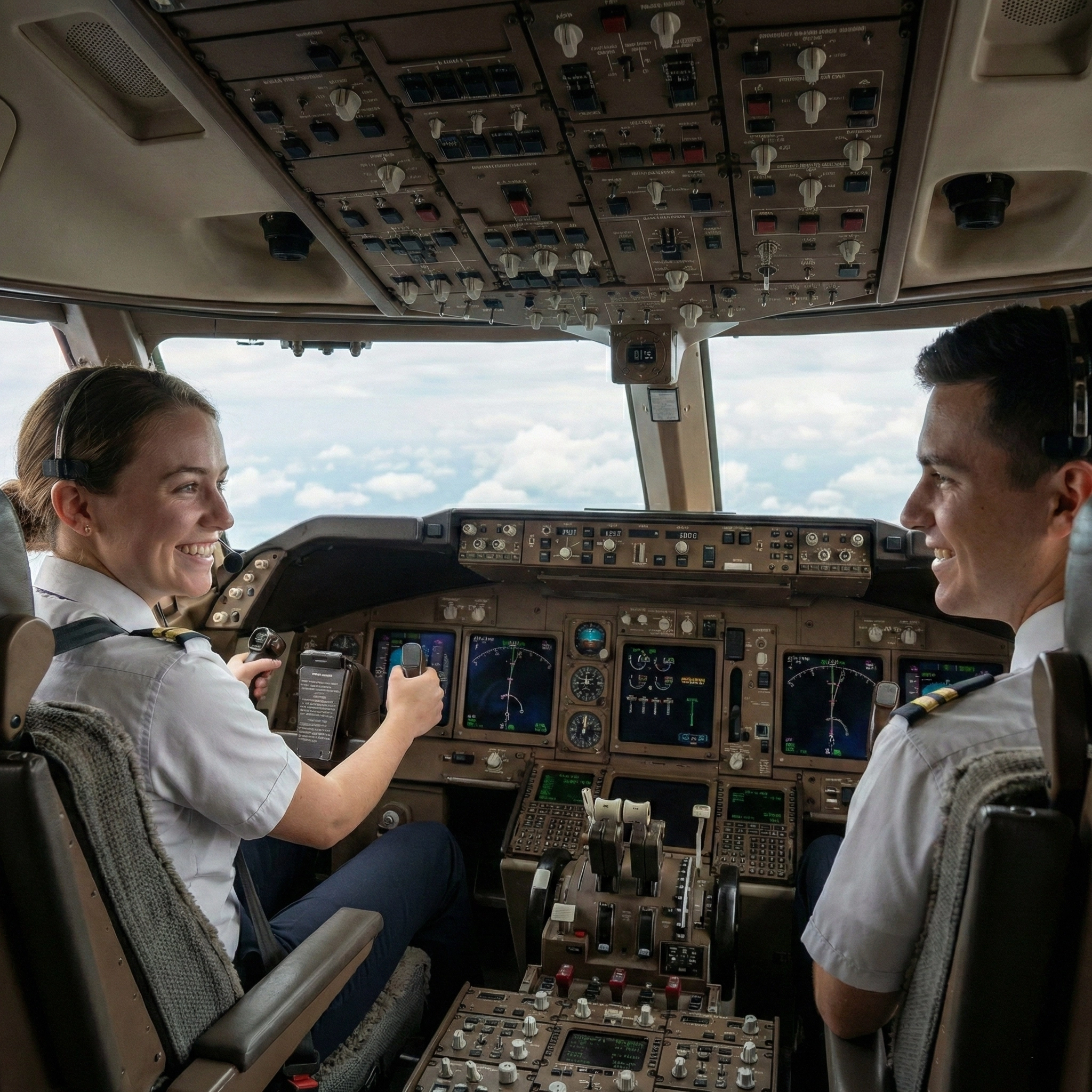
For many young people, the cockpit represents the ultimate office. But how exactly do you get there? The path to becoming a commercial pilot is a marathon, not a sprint, requiring dedication, investment, and a series of specific certifications.
Here is the step-by-step roadmap to the right seat of a commercial jet.
This is where it all begins. You learn the fundamentals of flight, navigation, and weather.
Often called the most important rating, this teaches you to fly solely by reference to your instruments, allowing you to fly through clouds and low visibility.
This license allows you to get paid to fly. The training focuses on precision, maneuvers, and professional standards.
After earning your CPL, you typically have around 250 flight hours. Airlines require much more (usually 1,500 hours). This phase is about bridging that gap.
Most aspiring airline pilots become instructors. Teaching others is the best way to master your own knowledge while building flight hours quickly.
You need to demonstrate you can fly complex aircraft with more than one engine. This is essential for airline operations.
This is the final bridge between general aviation and the airlines. It is a mandatory course involving ground school and simulator training (often on devices like the B747 simulators and flight training devices we host at Southcoast Simulation).
The "PhD of aviation." With 1,500 hours and your ATP-CTP complete, you pass your final written and practical exams to hold an Airline Transport Pilot certificate.
Once hired by a regional airline, you will undergo intensive initial training:
The path is long, but the view from the office is unbeatable. Whether you are just starting your PPL or are ready for your ATP-CTP, the aviation community is ready to welcome you.
At Southcoast Simulation, we are proud to support the training centers and partners that help pilots bridge the gap to their airline careers.